Many adults can benefit from a professional fluoride treatment, especially when cavities, dry mouth or worn enamel are part of the picture. Our Ocoee, FL dentists offer this quick, painless step for patients of every age, not only kids.
Here's what you need to know about fluoride treatment for adults.
Fluoride Isn't Only for Children
Most people connect fluoride with childhood checkups. Growing teeth do benefit, but adult enamel faces acid attacks every single day too.
The American Dental Association recognizes that in both children and adults. That protection doesn't expire once you turn 18.
How Fluoride Protects Adult Teeth
Each time you eat or drink, bacteria in plaque release acids that pull minerals out of enamel. Fluoride helps put those minerals back, a repair process called remineralization.
That repair can stop early decay and leave the surface harder for acids to break down. Cleveland Clinic notes that by about 25%.
Adults Who May Benefit Most
Your dentist may suggest fluoride if you:
- Get cavities often or show early signs of decay
- Have dry mouth from medications or a health condition
- Have receding gums that leave tooth roots exposed
- Show signs of enamel erosion
- Wear braces or have crowns, bridges or partial dentures
- Drink water that isn't fluoridated
Receding gums deserve special attention, because more easily. Saliva also protects teeth, so the risk of cavities.
If cold drinks make you wince, learn when sensitive teeth need attention before your next visit.
What Happens During a Fluoride Treatment
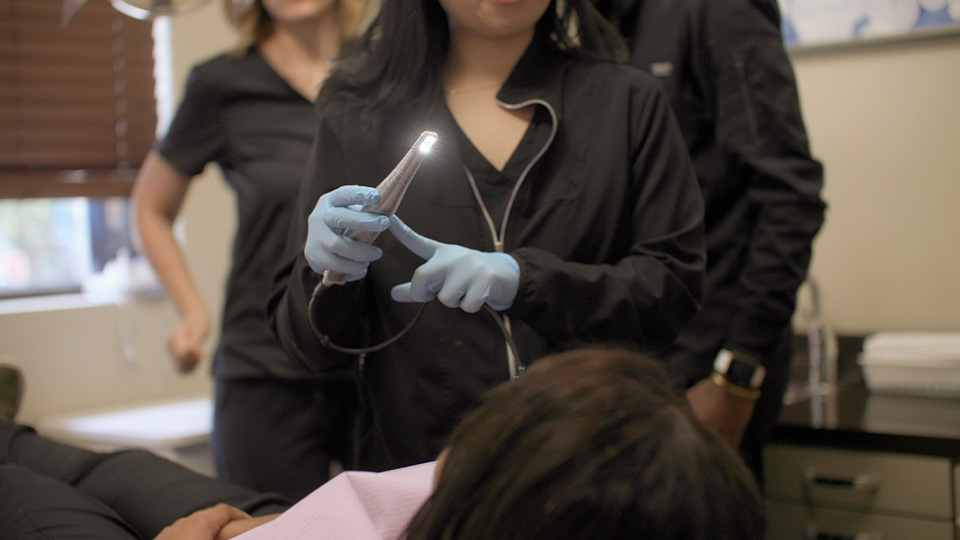
A dentist or hygienist applies a concentrated gel, foam or varnish directly to your teeth. Cleveland Clinic says the process usually takes less than five minutes.
At Classic Smiles, fluoride can be added to your teeth cleanings and exams as part of our preventive dentistry care. We tailor the amount to each patient, so an adult and a child don't receive the same dose.
How Often Adults Need It
There's no single schedule that fits everyone. The ADA notes that fluoride varnish needs at least two applications a year for lasting benefit, while professional gels are often applied every 3 to 12 months.
Many people pair fluoride with their six-month cleanings. If it's been a while, check these signs you're overdue for a cleaning.
Keep Fluoride Working at Home
Professional treatment works best alongside daily habits. The ADA recommends brushing twice a day with fluoride toothpaste, once in the morning and once before bed.
Cleaning between teeth daily and cutting back on sugary snacks help too. Adults with deep grooves in their molars may also want to ask about sealants for adult teeth.
Frequently Asked Questions
Does a fluoride treatment hurt?
No, a fluoride treatment is painless. The gel, foam or varnish simply coats the outside of your teeth, so there's no numbing, needle or drilling involved, and most adults notice only the taste and a slightly coated feeling for a short while.
Classic Smiles describes the treatment as painless and suitable for every member of the family, from young children to adults.
Do home water filters remove fluoride from tap water?
Some do and some don't, because reverse osmosis and distillation systems can lower the fluoride in your drinking water, while carbon or charcoal filters do not remove it. Many bottled waters also contain less than the recommended level.
The American Dental Association notes this can reduce the decay protection you would otherwise get from fluoridated water, so mention your water source at your next visit.
Is fluoride helpful while wearing braces?
Yes, it often is, because brackets and wires create extra places for plaque to collect, and the enamel around them can lose minerals if that plaque sits too long. A professional fluoride treatment adds a layer of protection during that stretch.
Classic Smiles lists patients going through orthodontic treatment, such as braces, among those who may be good candidates for fluoride.
Can fluoride reverse a cavity?
Fluoride can reverse decay only in its earliest stage, before a hole forms in the enamel. At that point, minerals from saliva and fluoride can help the weakened spot repair itself.
The National Institute of Dental and Craniofacial Research explains that once enamel breaks down and a cavity forms, the tooth needs a filling or other treatment instead of fluoride alone.
Is the fluoride in my toothpaste enough?
For many adults with a low risk of cavities, brushing twice a day with fluoride toothpaste may be enough. Adults with dry mouth, frequent cavities or exposed roots often need the higher strength a dental office can apply.
The ADA notes that the polishing paste used during a cleaning is not a substitute for fluoride gel or varnish for people at high risk of decay.
Ask About Fluoride at Your Next Visit
A few minutes in the chair can give adult teeth extra protection, especially when risk factors are present. Our dentists in Ocoee, FL can check your enamel and let you know if it makes sense for your smile.
Call Classic Smiles today at (407) 293-3002 to ask about a fluoride treatment, or request an appointment online.